SEO for business: In today’s digital age, if your business doesn’t show up on Google, it’s lost in a massive crowd. I’m Ravi Chauhan, and for several years I’ve been working on digital marketing and business growth strategies. Over this time, I’ve seen that businesses which take SEO seriously end up moving far ahead of their competitors. In this article, I’ll walk you through everything a business owner needs to know about SEO — in simple, practical language.
What is SEO?
SEO stands for Search Engine Optimization. In simple terms, SEO is a process through which we optimize our website or online content so that it appears higher in search engine results on platforms like Google and Bing.
When a user searches for something on Google — like “best digital marketing agency” or “affordable web design services” — Google’s algorithm scans millions of websites and shows the most relevant and trustworthy results. SEO’s job is to make your website worthy of being included in those top results.
SEO isn’t just one technique; it’s a continuous process made up of several components:
- On-Page SEO – Optimizing elements within the website itself (content, titles, headings, images)
- Off-Page SEO – Activities outside the website (backlinks, social signals, brand mentions)
- Technical SEO – Website speed, mobile-friendliness, security, and structure
- Local SEO – Helping local businesses reach customers in their own area
If you run a business in a specific city and want to be found by nearby customers, working with someone who understands local search patterns makes a real difference — for example, businesses in Ghaziabad often turn to a dedicated SEO expert in Ghaziabad to build this kind of location-focused visibility.
How Does SEO Work?
Google’s algorithm is extremely complex, but its basic purpose is simple — to give users the best and most relevant answer. When Google ranks a website, it looks at thousands of factors, including these important ones:
- Content Quality – Is the content useful, original, and detailed?
- Keywords – Does the content include the words people actually search for?
- Website Speed – Does the page load quickly?
- Mobile Friendliness – Does the website work well on mobile devices?
- Backlinks – How many quality websites link back to your site?
- User Experience (UX) – Do people stay and read the content, or leave immediately?
Together, these factors determine whether a website lands on page one of search results or gets buried on page ten, where almost no one goes looking.
Why Is SEO So Important for Business?
Many business owners assume SEO is only for big companies, or that social media marketing alone is enough. But the reality is that SEO acts as a foundation for businesses of every size. Let’s understand why:
1. Free and Organic Traffic
Paid ads (like Google Ads or Facebook Ads) require you to pay for every click that brings traffic to your site. But when your website ranks through SEO, you don’t have to keep paying for that traffic repeatedly. Once properly optimized, a website can keep bringing in organic traffic for months and years — essentially for free.
2. Builds Trust and Credibility
When a user sees a website on Google’s first page, a natural sense of trust forms: “this business must be genuine if Google is showing it at the top.” This psychological factor is powerful. It boosts your brand’s credibility, which improves both sales and customer loyalty in the long run.
3. A Game-Changer for Local Businesses
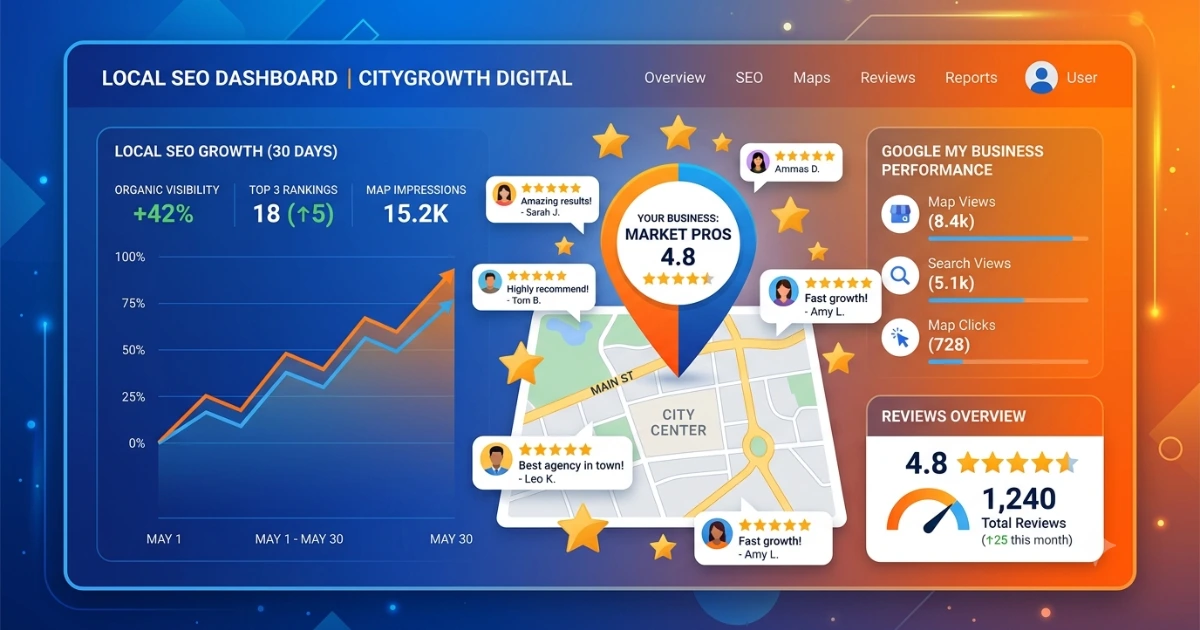
If you run a local business — like a restaurant, salon, clinic, or coaching center — Local SEO is your most important tool. When people search “near me,” like “best dentist near me,” ranking high on Google Maps and local listings directly increases footfall to your business. This is exactly the kind of work a GMB SEO expert in Ghaziabad specializes in — optimizing your Google Business Profile so local customers can find and choose you first.
4. Staying Ahead of Competitors
Competition today is fierce in nearly every industry. If your competitors are doing SEO and you’re not, the customers who search online will go straight to them — even if your product or service is better. SEO is a field where falling behind directly means losing market share.
5. Long-Term ROI
Many digital marketing channels deliver short-term results, but SEO is a long-term investment. Once your website achieves good rankings, it keeps generating leads and sales consistently, which means your Return on Investment (ROI) actually improves over time.
6. Better User Experience
SEO isn’t just about pleasing Google — good SEO practically makes your website better for users too. Fast loading times, easy navigation, and mobile-friendly design not only improve rankings but also help convert visitors into paying customers.
SEO and Its Connection to E-E-A-T
Google introduced a concept in its search quality guidelines called E-E-A-T — Experience, Expertise, Authoritativeness, and Trustworthiness. This is especially important for topics related to health, finance, or safety, but it’s helpful for every niche.
- Experience – Has the content creator had real, first-hand experience with the topic?
- Expertise – Does the writer or website have genuine knowledge of the subject?
- Authoritativeness – What is the website’s reputation and standing within its industry?
- Trustworthiness – Is the website secure, is the information accurate, and is there transparency?
For business owners, it’s important to display author bios, real case studies, customer reviews, and clear contact information on your website. This not only builds Google’s trust but also makes users trust your website more.
SEO for business In Detail
On-Page SEO
This involves optimizing the content and structure of the website itself — such as title tags, meta descriptions, header tags (H1, H2, H3), image alt text, and internal linking. Writing quality content that accurately answers a user’s search query is the most important part of on-page SEO.
Off-Page SEO
This covers activities that happen outside the website, such as earning backlinks from other websites, building social media presence, and collaborating with influencers. Backlinks act as a “vote of confidence” for Google.
Technical SEO
This relates to the backend health of your website — site speed, mobile responsiveness, secure HTTPS connections, XML sitemaps, and crawlability. If technical SEO is weak, ranking becomes difficult no matter how good the content is.
Local SEO
Optimizing your Google Business Profile, building local citations, and collecting customer reviews are all part of local SEO, which helps attract nearby customers. Businesses that want hands-on support with this often work with a GMB SEO expert in Ghaziabad to make sure their local listing is fully optimized and consistently maintained.
How Should Small Businesses Get Started with SEO?
If you’re a small business owner looking to start with SEO, here are some practical steps:
- Do Keyword Research – First, understand what your customers actually search for on Google
- Set Up Google My Business – This is essential for local visibility
- Write Quality Content – Blog posts, guides, and FAQs that solve your customers’ problems
- Improve Website Speed – A slow website drives users away instantly
- Keep a Mobile-Friendly Design – Over 60% of traffic today comes from mobile devices
- Collect Reviews – Positive reviews boost both trust and local rankings
- Update Content Regularly – Google favors fresh, updated content
If managing all of this on your own feels overwhelming, working with a local specialist — such as an experienced SEO expert in Ghaziabad — can help you build a structured strategy instead of guessing your way through it.
Common SEO Myths
Many people hold on to incorrect assumptions about SEO. Here are some common myths:
- “SEO is a one-time task” — This is wrong; SEO is an ongoing process
- “Just stuffing keywords will get you ranked” — Google now penalizes keyword stuffing
- “SEO results happen instantly” — In reality, results can take 3-6 months or longer
- “Only big businesses need SEO” — Businesses of every size benefit from SEO
Conclusion
SEO is no longer a luxury in today’s digital business landscape — it’s a necessity. Whether you’re running a startup or an established business, if you want online visibility, customer trust, and long-term growth, SEO needs to be a core part of your marketing strategy.
My advice, as Ravi Chauhan, to business owners is this — be patient with SEO, stay consistent, and always focus on delivering value to your users. When you build content around your real customers’ needs instead of just chasing Google’s algorithm, rankings and growth follow naturally.
If you have any questions about this article, or want help building an SEO strategy for your business, feel free to share them in the comments.
About the Author: Ravi Chauhan works in digital marketing and business growth strategy, and regularly shares practical insights on SEO, marketing, and entrepreneurship on the Business Insights Blog.